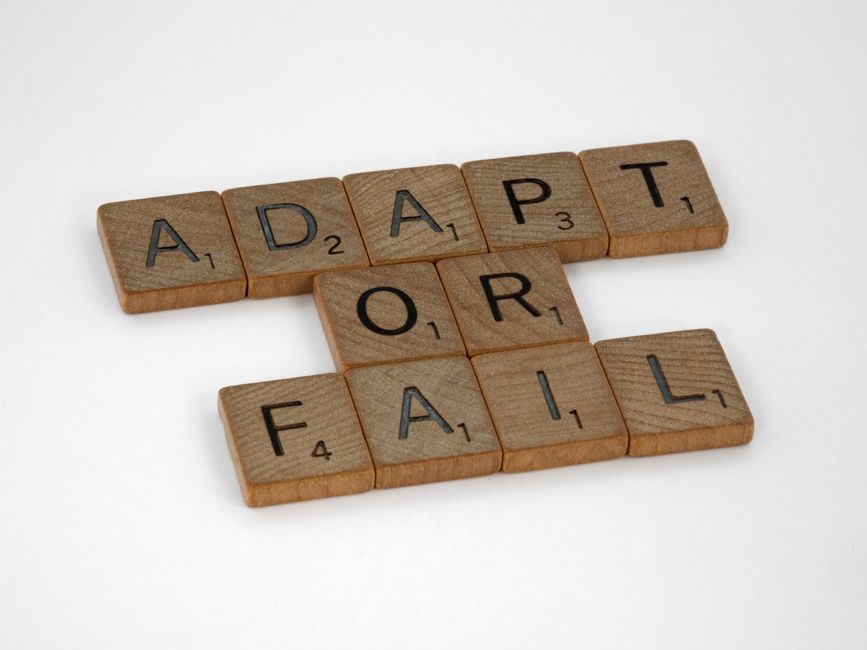
Most organizational failure does not stem from a lack of talent or ambition; it stems from a stubborn adherence to outdated rulebooks. When companies scale, they often trade agility for institutional inertia. The concept of adaptive governance models—specifically those documented in the 415-418 range of organizational theory—challenges the traditional command-and-control paradigm. These models posit that governance should not be a static cage, but a dynamic, self-correcting system that adjusts based on real-time data and environmental feedback.
\n\n
For the modern executive, the goal is not to eliminate structure, but to optimize the friction between control and innovation. If your governance model requires a six-week approval cycle for a minor pivot, you have not built a foundation; you have built a bottleneck. High-performance leadership requires moving away from hierarchical gatekeeping toward a decentralized decision-making framework where authority is distributed to the point of impact.
\n\n
Decentralizing Authority for High-Performance Execution
\n
The core of adaptive governance lies in the separation of strategy and execution. By delegating tactical decisions, leadership maintains the cognitive bandwidth necessary for long-term strategy. However, this shift requires a high degree of operational maturity. You cannot decentralize if your team lacks the mental models to act autonomously.
\n\n
The Principle of Guardrails Over Gatekeepers
\n
Adaptive models replace the \”ask permission\” culture with a \”follow the guardrails\” system. Leaders must define the boundaries of acceptable risk, fiscal constraints, and brand alignment. Within those boundaries, teams have absolute freedom. This reduces the latency of execution. When information flows without being filtered through layers of management, the organization responds to market shifts with the speed of a startup while maintaining the resources of a legacy entity.
\n\n
Feedback Loops and Iterative Governance
\n
Rigid governance assumes the initial plan is correct. Adaptive governance assumes the plan is merely a hypothesis. By integrating continuous feedback loops, leaders can treat governance as an iterative product. This means periodically stress-testing internal processes. If a policy consistently hinders productivity without mitigating significant risk, it must be sunsetted. This is the essence of operational excellence: the ability to prune the organization of unnecessary complexity continuously.
\n\n
The Role of AI in Governance Evolution
\n
We are entering an era where human-led governance is increasingly augmented by machine intelligence. AI provides the unprecedented ability to monitor compliance and performance metrics in real time, allowing for \”governance by exception.\” Instead of auditing every transaction or reviewing every decision, leadership systems can flag anomalies for human intervention. This moves governance from a reactive, manual task to a proactive, automated layer of high-performance thinking.
\n\n
This does not mean surrendering control to algorithms. It means using technology to enforce the guardrails you have established. By automating the mundane aspects of oversight, you free your leadership team to focus on the high-stakes decisions that require intuition, empathy, and strategic foresight.
\n\n
Building Resilience Through Flexibility
\n
The 415-418 adaptive frameworks teach us that organizations are living systems. Like any biological entity, they must adapt to survive. A governance model that cannot bend will eventually break under the pressure of market volatility. To build a robust organization, you must institutionalize the capacity to change your own rules. This requires a culture that values the truth over hierarchy and results over process adherence. When you remove the fear of challenging the status quo, you unlock the full intellectual capital of your workforce.
\n\n
Focus on creating a system where the process serves the people, not the other way around. Audit your current governance structures: identify the bottlenecks, decentralize the tactical decisions, and implement real-time feedback loops. The transition to adaptive governance is not a one-time project; it is a permanent commitment to organizational health and speed.